If you have spent any time at a Greek table, you have probably been offered a small glass of something strong and clear at the end of the meal. That is raki, and it is one of the most deeply rooted traditions in Greek hospitality. So, what is raki exactly? In short, raki is a clear, grape-based spirit distilled from the leftover skins, seeds and stems of grapes after winemaking, known as pomace. It is strong, usually unsweetened, and traditionally served as a warm gesture of welcome or farewell rather than something you sip slowly through dinner.
Raki goes by different names depending on where you are in Greece. In Crete, it is most often called tsikoudia, while in other parts of the country you will hear it referred to simply as raki. It is worth noting that Greek raki, tsikoudia, is a different drink from Turkish rakı, which is typically flavored with anise and closer in style to ouzo.
Alongside raki, two other Greek spirits often come up in conversation: ouzo and tsipouro. Each has its own identity, production method and place at the table, and knowing the differences makes ordering and enjoying these drinks much more rewarding, whether you are relaxing over a meal at a seafood restaurant in Mykonos or exploring a taverna in the islands.
Key Takeaways
- Raki (tsikoudia) is a clear spirit distilled from grape pomace, the skins and seeds left after winemaking.
- Ouzo is anise-flavored and typically turns cloudy white when mixed with water or ice, a reaction known as the ouzo effect.
- Tsipouro is also a grape-pomace spirit like raki, but it comes in two versions: with anise and without.
- Greek raki (tsikoudia) is not the same as Turkish rakı, which is anise-flavored rather than plain.
- All three spirits are traditionally served alongside meze and shared food rather than consumed alone.
What Is Raki, Exactly?
Raki, or tsikoudia as it is known in Crete, is made by distilling the pomace left over from pressing grapes for wine. Because it uses this byproduct rather than fresh grapes, it has historically been a practical, resourceful drink made by wine-producing households across Greece, particularly in Crete. It is generally clear, strong and unsweetened, with a character that reflects the grape variety and the skill of the distiller. Raki is most commonly served neat, in small glasses, either chilled or at room temperature, and it is deeply tied to Cretan hospitality, where offering a glass to a guest is considered a sign of welcome.
Is Raki Greek or Turkish?
Both, but the name covers two different drinks. In Greece, raki usually means tsikoudia, the plain, unflavored grape pomace spirit of Crete. In Turkey, rakı is an anise flavored spirit made from grapes or raisins, much closer in taste to Greek ouzo. The shared name comes from a word used across the Eastern Mediterranean and the Balkans for distilled spirits, which is also why you will see rakija in Serbia, Croatia and Bulgaria. So if you order raki in Greece, expect a clear, dry spirit without the licorice notes of the Turkish version.
Raki vs Ouzo vs Tsipouro: What Is the Difference?
The easiest way to tell these spirits apart is by flavoring and, in some cases, production style.
Ouzo is anise-flavored from the start. The anise and other botanicals are part of the distillation process, giving ouzo its distinctive licorice-like aroma. When you add water or ice, ouzo turns milky white, a visual reaction caused by the essential oils in anise, often called the ouzo effect. This is one of the easiest ways to recognize ouzo at a glance.
Tsipouro is, like raki, a grape-pomace spirit, but it is produced mainly in mainland Greece, especially Thessaly and Macedonia. Tsipouro comes in two main styles: one flavored with anise, similar in character to ouzo, and one left plain, closer to raki. This makes tsipouro something of a bridge between the two other spirits.
Raki (tsikoudia), as covered above, is generally unflavored, made and consumed most typically in Crete, and known for its straightforward, potent character.
So raki, ouzo and tsipouro each have their own roots in Greek distilling, and the presence or absence of anise, along with regional tradition, is what sets them apart on the table.
Raki vs Ouzo vs Tsipouro at a Glance
| Spirit | Made from | Anise? | Main region | How it is served |
|---|---|---|---|---|
| Raki (tsikoudia) | Grape pomace | No | Crete | Neat, in small chilled glasses, often as a welcome or farewell |
| Tsipouro | Grape pomace | With or without | Mainland Greece (Thessaly, Macedonia) | Neat, or with water and ice, alongside meze |
| Ouzo | Neutral spirit distilled with anise and botanicals | Yes | Across Greece, famously Lesvos | With water and ice, turns cloudy white |
| Turkish rakı | Grapes or raisins | Yes | Turkey | With chilled water, turns cloudy, with meze |
How Do Greeks Drink These Spirits?
Tradition matters as much as the drink itself. Raki is typically served in small glasses and taken as a shot, often at the start or end of a meal, or as a gesture of hospitality when welcoming guests. In Crete, it is common for a taverna to offer a complimentary glass of raki simply as a sign of goodwill, regardless of what you ordered.
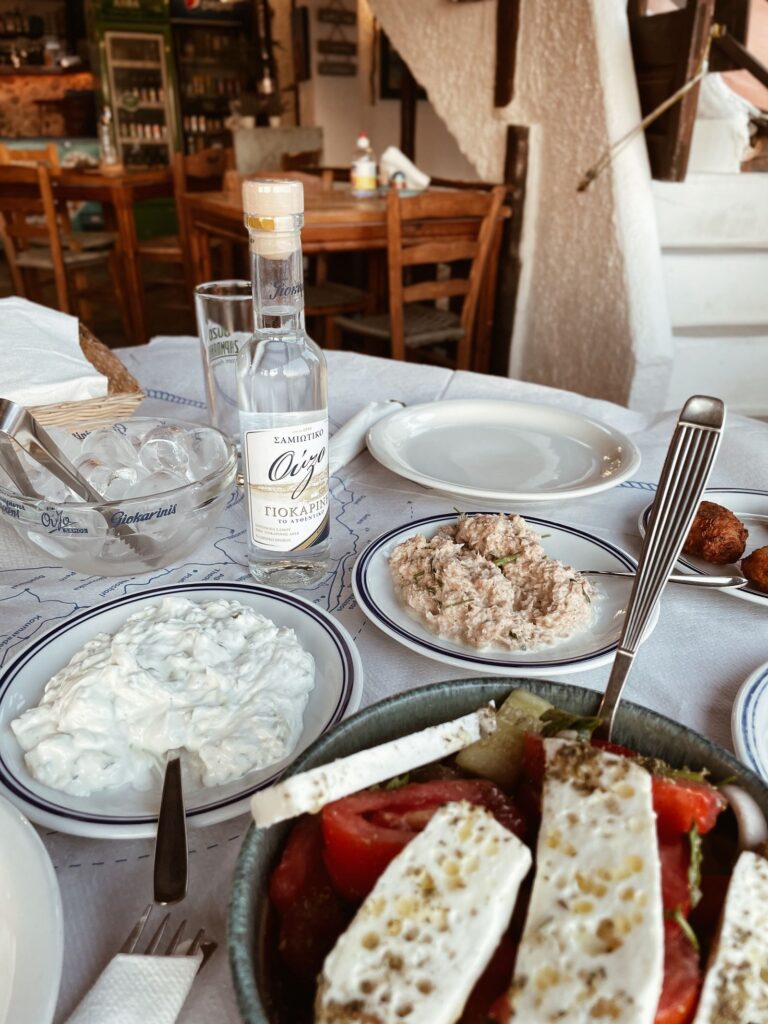
Ouzo, on the other hand, is usually enjoyed more slowly. It is common to see it served with a small carafe of water and a glass of ice on the side, so you can dilute it to your own taste and watch it turn cloudy. Tsipouro follows a similar pattern to whichever style it is: anise-flavored tsipouro is often treated like ouzo, while plain tsipouro is sipped more like raki.
None of these spirits are typically drunk in isolation. They are woven into the rhythm of a shared meal, poured throughout an evening of conversation and small plates rather than consumed on their own.
Food Pairing: Raki, Ouzo, Tsipouro & Meze
Pairing is where these spirits truly shine, and this is especially true when seafood is on the table. The clean, dry character of ouzo and tsipouro pairs naturally with the briny, delicate flavors of fresh fish, shellfish and other seafood meze, cutting through richness and refreshing the palate between bites. Raki, being stronger and more direct, works well as a palate cleanser before or after a meal, or alongside bolder, saltier bites.
If you want to explore how these spirits work with traditional small plates, our greek meze guide walks through classic pairings in more detail. And if your evening in Mykonos Town leans more toward a crafted cocktail than a traditional spirit, our guide to cocktails in Mykonos covers a more contemporary side of the island’s drinking culture, distinct from the traditional spirits covered here.
If you prefer a glass of wine with dinner, our guide to Greek wines in Mykonos covers the main grape varieties to know.
Frequently Asked Questions
What is raki made of?
Raki is distilled from grape pomace, the skins, seeds and stems left after grapes are pressed for wine. Plain raki is usually unflavored, which sets it apart from anise-flavored ouzo.
Is raki the same as ouzo?
No. Raki (tsikoudia) is generally unflavored and made from grape pomace, while ouzo is flavored with anise during distillation, giving it a distinct licorice-like taste and its characteristic cloudy appearance when diluted.
Is raki Greek or Turkish?
Both countries have a drink called raki, but they are different. Greek raki (tsikoudia) is a plain grape pomace spirit from Crete, while Turkish rakı is anise flavored and closer in style to ouzo.
Is tsipouro the same as raki?
They are very close. Both are distilled from grape pomace, and plain tsipouro tastes much like raki. The main differences are region, with tsipouro made mostly on the mainland and raki in Crete, and the fact that tsipouro is also made in an anise flavored version.
How should I drink raki?
Serve raki neat, in a small glass, often chilled. In Crete it is often taken as a shot at the start or end of a meal, or as a welcome or farewell, rather than sipped through dinner.
What is the percentage of alcohol in raki?
Greek raki (tsikoudia) is usually bottled at around 40 percent alcohol by volume, which is strong, and home-made versions can be stronger. Check the label, since strength varies from producer to producer.
Can raki make you drunk?
Yes. It is a strong spirit, so a few small glasses can make you drunk, especially on an empty stomach. Eat with the meze and drink slowly.
If you would like a seafood dinner while you explore the island’s drinks, book a table with us in Mykonos Town.