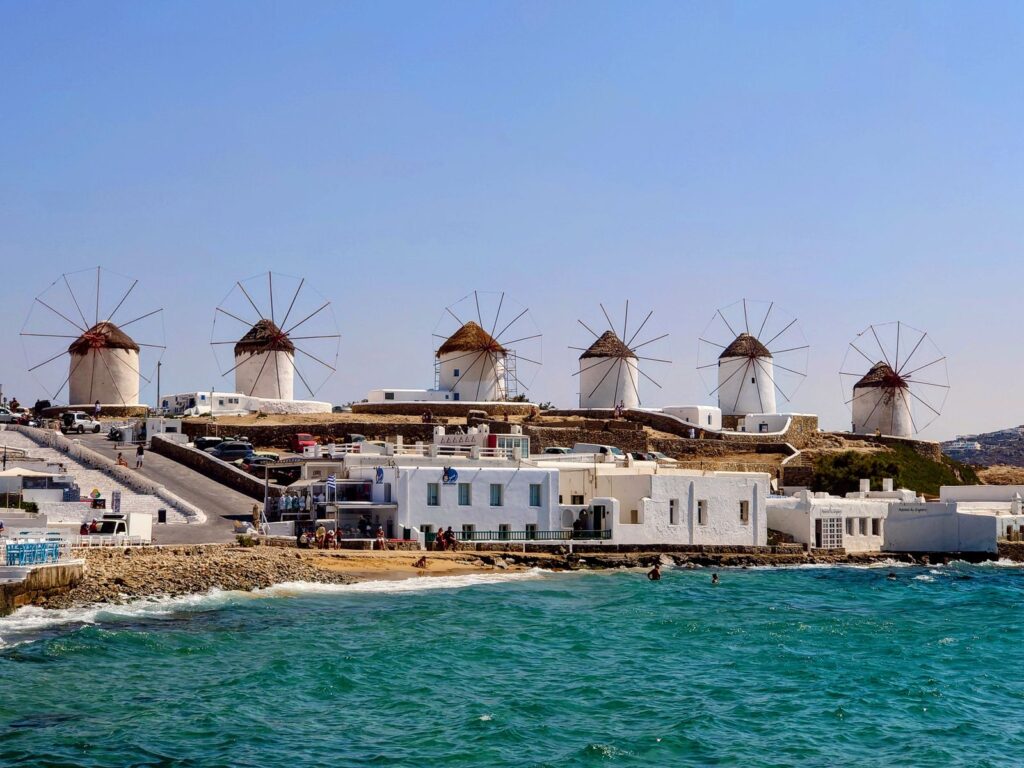
The windmills of Mykonos, the whitewashed row standing on the low hill above the harbour, known locally as Kato Mili, are the island’s most recognisable landmark. They are free to visit, a short walk from the heart of Mykonos Town, and at their most beautiful in the hour before sunset. Here’s what they are, why they’re there, and how to make an evening of it.
Key Takeaways
- The windmills sit on a small rise between the old harbour and the Alefkandra quarter, a short walk from the heart of Mykonos Town.
- They were working flour mills for centuries, grinding grain for the island and for ships crossing the Aegean.
- Visiting is free, and the mills are an outdoor landmark, not a ticketed site.
- The classic time to go is late afternoon into sunset, followed by dinner in town.
What are the windmills of Mykonos?
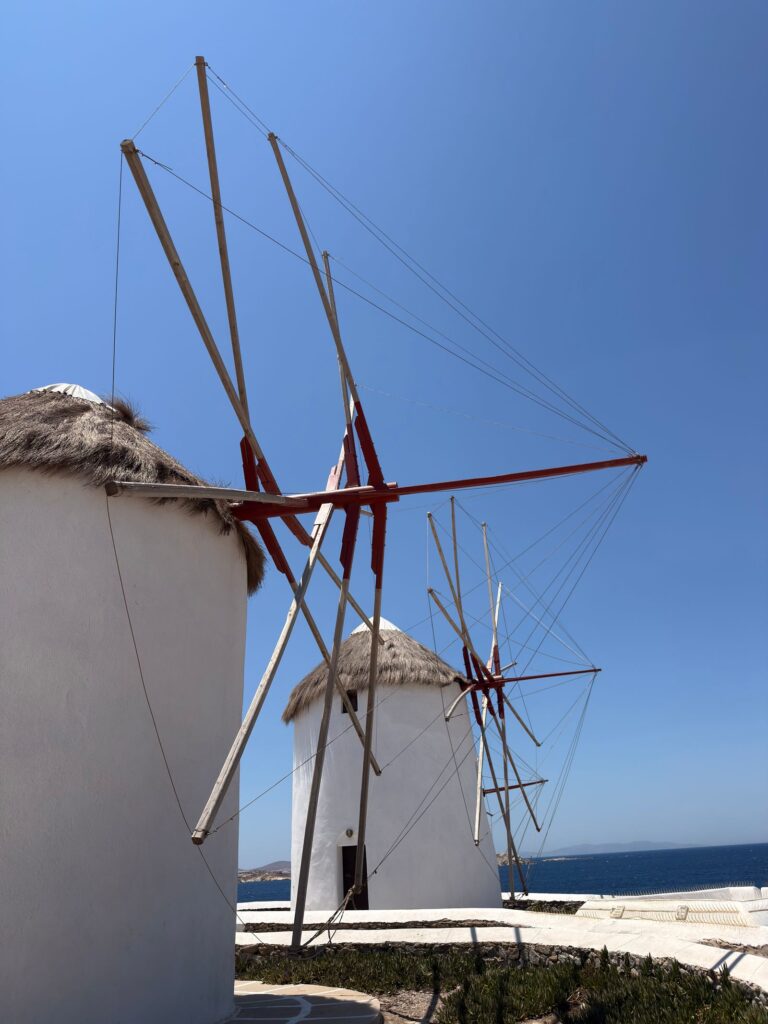
They are traditional Cycladic windmills: round stone towers, whitewashed, with pointed straw-capped roofs and wooden sails facing the north wind. Mykonos was once dotted with working mills. The island’s strong, steady winds made it a natural milling stop, and the surviving cluster above town is the best known group.
Their design is pure function turned beautiful. The circular shape and small windows stand up to the wind; the sails caught it; and inside, millstones ground wheat and barley into flour. Today the mills no longer turn, but they remain the enduring symbol of the island. You’ll see their silhouette on everything from postcards to wine labels.
Why were the windmills built?
Position, position, position. For centuries Mykonos sat on busy sailing routes across the Aegean, and passing ships needed provisions, above all flour and the twice-baked bread (rusk) that kept on long voyages. The island’s relentless meltemi wind provided free power, so milling became one of Mykonos’ most important trades.
The mills above the harbour worked into the early 20th century, when steam and industrial milling gradually made them obsolete. What was once infrastructure is now heritage, and the most famous view on the island.
When is the best time to visit the windmills?
Late afternoon. The best light comes as the sun drops, when the whole row lights up gold and the crowds gather for one of the best free shows in the Cyclades. Sunset here, then a slow wander through the lanes of Chora to dinner, is about as good as a Mykonos evening gets. Arrive at least half an hour before sunset to claim a good spot on the hill, because the best vantage points fill up quickly in summer.
If you want photographs without people in them, come early in the morning instead. The light is soft, the town is quiet, and you’ll have the hill almost to yourself. For more ideas on structuring your day, see our local guide to things to do in Mykonos.
| Time | Crowd level | Best for |
|---|---|---|
| Early morning | Quiet, often almost empty | Soft light and photos without people |
| Midday | Busy under a strong sun | A quick look while you are in town |
| Late afternoon to sunset | The busiest time on the hill | The classic golden view |
How do I get to the windmills?
Walking is the only sensible way. From the old harbour, follow the waterfront through the Alefkandra quarter, and you’ll see the mills on the rise ahead within a few minutes. From most parts of Mykonos Town you can simply aim for their silhouette. There’s no entrance and no ticket, because the hill is open ground.
Wear comfortable shoes, because the polished flagstones of Chora are lovely but slippery. Bring a light layer for the evening, when the same wind that once turned the sails can whip across the hill.
Once you are on the hill, walk around the row rather than standing in one spot. The view from the Alefkandra waterfront below shows the mills rising above the rooftops, while the hill gives you the open sunset view over the water, so both angles are worth a few extra minutes.
What else is near the windmills?
You’re standing at the edge of the most atmospheric corner of Mykonos Town. Directly below, the old houses of Alefkandra drop straight into the sea, their painted balconies hanging over the water. The lanes behind lead into the heart of Chora, with chapels, galleries, boutiques and a wide choice of restaurants in Chora.
It’s also the natural start to an evening out. Watch the sunset at the mills, then head into town for dinner at Nautilus, in the Lakka quarter by the old post office. If you like eating with the sea in view, our guide to dining with a view in Mykonos pairs well with a windmill sunset.
Are the windmills worth visiting?
Yes, unreservedly. They cost nothing, take minutes to reach, and deliver the single most iconic image of Mykonos. Even at the height of summer, when the hill draws a crowd at dusk, the setting carries it. Some landmarks disappoint in person; this one doesn’t.
The trick is to treat them not as a box to tick but as the opening act of an evening: golden hour on the hill, a wander through the lanes, and a long dinner in town. Reserve your table ahead in high season and the whole evening runs itself.
The windmills stand just above Little Venice, so the two make an easy sunset walk together.
Frequently Asked Questions
Why are the windmills in Mykonos famous?
They are the island’s most recognisable landmark, a row of whitewashed stone mills on the hill above Mykonos Town. Their silhouette appears on postcards and wine labels, and the view over the sea at sunset is what keeps them so famous.
Can you walk to the windmills on Mykonos?
Yes, walking is the easiest way. From the old harbour you follow the waterfront through the Alefkandra quarter, and the mills are on the rise ahead within a few minutes. Wear comfortable shoes, because the flagstones in Chora can be slippery.
Are there windmills in Mykonos, Greece?
Yes. The best known are the windmills on the low hill above Mykonos Town, known locally as Kato Mili. They are the surviving group of many working mills that once dotted the island.
How old are the windmills of Mykonos?
They have stood for several centuries, and they were built to grind grain for the island and for ships crossing the Aegean. The mills above the harbour kept working into the early 20th century, when steam and industrial milling made them obsolete.
How do I get from Mykonos cruise port to windmills?
Take a taxi or bus from the cruise port into Mykonos Town, since the port is outside the centre. From the old harbour, walk along the waterfront through the Alefkandra quarter, and the windmills are on the rise ahead within a few minutes.
What are the different types of windmills?
The windmills on Mykonos are traditional Cycladic mills, round whitewashed stone towers with pointed roofs and wooden sails that face the north wind. Mills elsewhere in Greece can differ in design, but these tower mills are the style you will see on the island.
Which Greek island is known for windmills?
Mykonos is the island best known for windmills. The row of whitewashed mills on the hill above Mykonos Town is its landmark, and their silhouette appears on everything from postcards to wine labels.